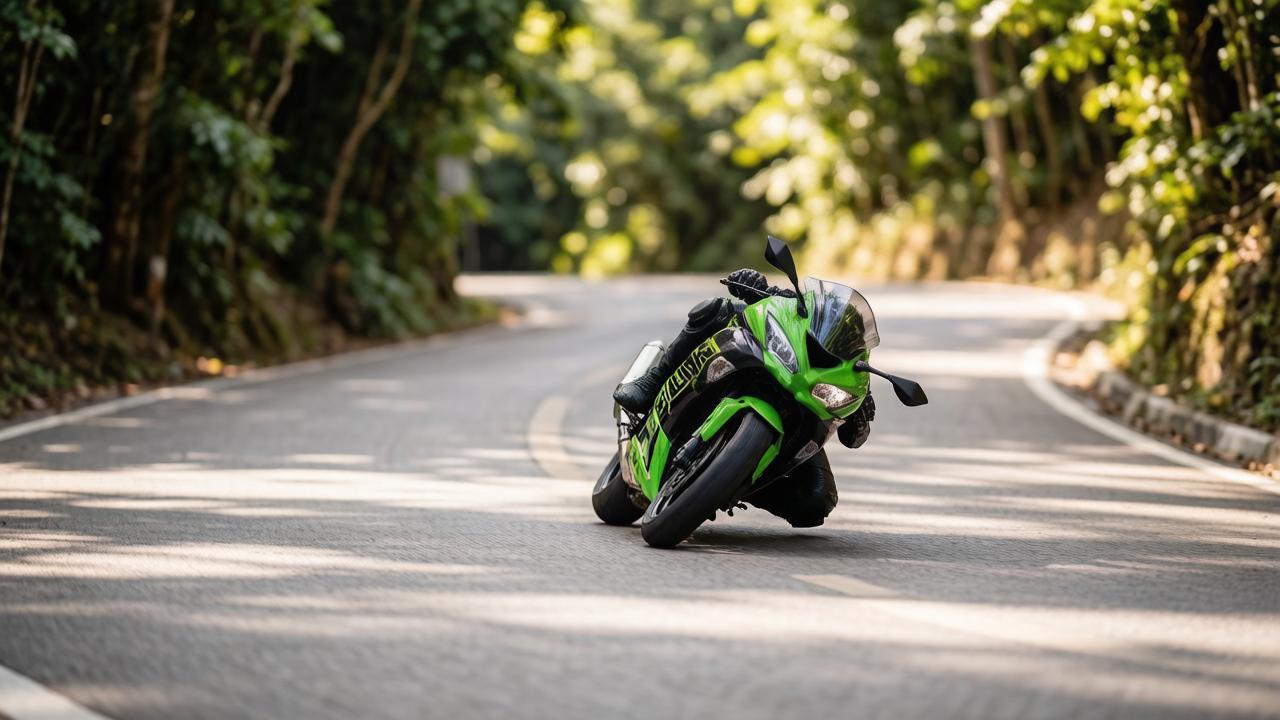
When your mechanical mission shifts from casual city cruising to executing precise apex tracking through aggressive mountain elevations, your choice of vehicle geometry dictates your ultimate performance threshold. The extreme topography of Northern Thailand serves as a world-class playground for two-wheeled enthusiasts, but it also demands hardware that can manage intense cornering loads, deliver linear high-RPM acceleration, and provide transparent front-end feedback. Within the lightweight sportbike category, the Kawasaki Ninja 400 stands as an absolute benchmark of high-velocity engineering, blending a race-derived trellis frame with an aggressive parallel-twin engine engineered to dominate both closed circuits and public mountain asphalt.
For high-performance enthusiasts landing in the northern capital, selecting a mechanical asset from a standard, generic chiang mai scooter rental pool is completely inadequate for high-altitude operations. While an automatic step-through scooter is highly efficient for low-speed urban transit within the old city moat or navigating tight night-market parking cells, it introducing severe physical limitations when attacking a vertical 12-percent grade mountain switchback. Light automatic transmissions lack manual engine braking capabilities, causing immense thermal strain on tiny brake calipers during long continuous downhill descents. Graduating to a manual, sport-tuned platform like the Kawasaki Ninja 400 gives you absolute gear control, allowing you to manipulate the power band manually and maintain high entry speeds through demanding technical corners.
The Parallel-Twin Powerhouse: High-Revving Telemetry
The engineering core of the Kawasaki Ninja 400 is its liquid-cooled, 4-stroke, 8-valve parallel-twin engine packing a precise 399cc displacement. This high-efficiency powerplant was designed from a clean sheet, optimizing internal mass distribution and incorporating an innovative downdraft intake structure paired with a massive 5.8-liter airbox. This intake architecture straightens the path for incoming air-fuel mixtures, drastically improving cylinder filling efficiency and delivering instantaneous throttle response across the entire RPM register.
The internal blueprint utilizes specialized forged camshafts, a lightened flywheel configuration, and advanced friction-reduction coatings on the piston skirts. These choices allow the engine to rev freely up to its aggressive 12,000 RPM redline. Developing roughly 45 horsepower at 10,000 RPM and 38 Nm of crisp torque at 8,000 RPM, the Ninja 400 provides a violent yet completely manageable surge of power. This linear delivery ensures that when you roll on the throttle mid-corner, the rear tire hooks up cleanly without breaking traction on variable mountain asphalt surfaces.
Ninja 400 Engine Efficiency Metrics
Every aspect of the 399cc platform is refined to shed unnecessary weight while maximizing mechanical output during high-RPM tracking sequences.
- Bore x Stroke: 70.0 mm x 51.8 mm optimized for high-rev stability and fast transient response.
- Cooling System: High-capacity radiator paired with a specialized fan shroud that directs hot air down away from the rider.
- Clutch Assembly: Assist & Slipper clutch that completely eliminates rear-wheel hop during aggressive high-RPM downshifts.
Trellis Frame Architecture and Supersport Handling
Engine performance means nothing if the chassis flexes under load. The Ninja 400 features a high-tensile steel trellis frame designed using advanced dynamic rigidity analysis, similar to the architecture utilized on the hyper-engineered Ninja H2 platform. The engine is hard-mounted as a stressed member of the frame, drastically reducing overall weight while establishing a rigid, unyielding platform that tracks straight and true through high-velocity sweepers.
The chassis dimensions feature an ultra-short 1370mm wheelbase combined with an aggressive 24.7-degree rake angle, delivering razor-sharp turn-in characteristics. Suspension duties are managed by robust 41mm telescopic front forks that maintain exceptional frontend rigidity, preventing structural twisting during hard trail-braking maneuvers. The rear features a bottom-link Uni-Trak shock absorber with a 5-way adjustable gas-charged preload cell, allowing riders to tune their mechanical sag configuration based on track conditions.
The braking system is anchored by a massive 310mm semi-floating front disc—the exact same disc size used on the larger Ninja 1400 flagship models—clamped by a dual-piston Nissin caliper and managed by a lightweight Nissin ABS control module. This oversized braking hardware provides immense initial bite and exceptional lever modulation feel, letting you scrub off speed with pinpoint accuracy right up to the turning marker without inducing hydraulic line expansion or thermal fluid decay.
Chassis Component | Technical Specification | Performance Impact |
|---|---|---|
Front Wheel Inventory | 5-spoke star-pattern lightweight alloy | Reduces unsprung mass for faster directional changes |
Rear Tire Spec | 150/60R17 Radial Sports Compound | Maximizes lateral contact patch during deep lean angles |
Swingarm Design | Long square-tube steel directly bolted to engine | Improves rear-wheel tracking and drive out of corners |
Ergonomics, Vision, and Cockpit Management
True high-velocity control is completely dependent on rider integration and spatial visibility. The Ninja 400 features a relaxed sport riding position that utilizes clip-on handlebars mounted slightly above the top triple clamp, keeping your weight forward for frontend control without causing extreme wrist fatigue during prolonged transit segments. The narrow fuel tank cell allows you to lock your knees firmly against the tank structure, stabilizing your core during violent transitions and heavy deceleration phases.
The cockpit features a premium instrument panel cluster integrating a large analog tachometer with multi-function LCD indicators tracking real-time gear selection, fuel consumption telemetry, water temperature fluctuations, and an economical riding indicator. The dual LED headlights deliver exceptionally wide and bright illumination arrays, carving through pitch-black mountain fog and ensuring road obstacles are recognized long before you commit your entry line to a blind apex corner.
“A supersport chassis doesn’t just ask for inputs; it amplifies your riding intentions. When you drop your shoulder and look through the corner, the Ninja 400 tracks with surgical authority.”
Ultimately, the Kawasaki Ninja 400 represents a masterclass in lightweight sport motorcycle engineering. It throws away the compromises of generic commuting and replaces them with pure racing DNA, ensuring that your tracking operations across Northern Thailand’s alpine passes remain sharp, fast, and entirely within your command.