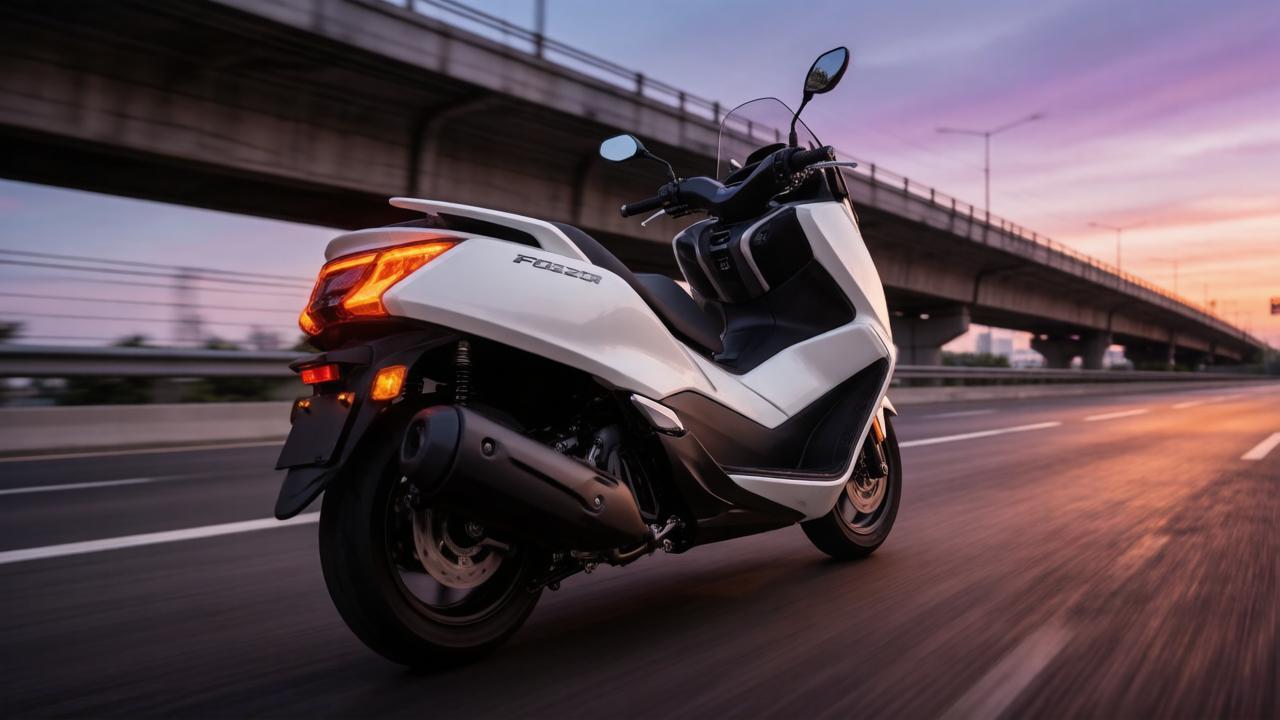
When your mechanical operational parameters expand from narrow downtown alleyways to sprawling multi-lane highway networks and high-velocity outer ring roads, standard lightweight commuter platforms rapidly hit their structural limits. Navigating long open straightaways under a punishing tropical sun requires a heavy-duty frame, exceptional aerodynamic shielding, and an engine displacement capable of sustaining high cruising velocities without inducing thermal stress or vibration fatigue. Within the modern maxi-scooter category, the Honda Forza 350 stands as a premier testament to grand-touring engineering, delivering a sharp combination of high-displacement power and premium urban luxury built specifically for high-velocity riders.
For executive travelers, independent racing crews, and solo explorers demanding absolute reliability during long-distance transit across Northern Thailand, selecting the correct tier of machinery is a critical tactical decision. While a light 110cc automatic scooter excels at navigating tight street markets, it leaves you dangerously vulnerable to crosswinds and high-speed overtaking maneuvers on commercial freight routes. When your mission profile includes hours of continuous highway cruising, making the conscious decision to rent scooter chiang mai hardware within the maxi-scooter classification changes your entire road authority. Stepping up to the Forza 350 ensures you possess the immediate passing power and mechanical presence needed to dictate your own lines through heavy traffic patterns.
The eSP+ Powertrain: Total Torque Optimization
The engineering core of the Honda Forza 350 is its liquid-cooled, 4-valve, SOHC Smart Power Plus (eSP+) engine boasting a precise 330cc displacement. This enhanced architecture utilizes an array of low-friction technologies designed to maximize thermal and mechanical efficiency. The offset cylinder layout paired with a specialized piston oil jet cooling system—a high-performance technology adapted straight from professional racing programs—ensures the engine block remains stable under continuous high-load applications, such as climbing sustained highway inclines with heavy luggage inventory.
The power delivery is controlled by a modern fuel injection assembly that continuously recalculates the air-fuel ratio based on real-time atmospheric inputs. This gives the Forza 350 a highly linear and predictable throttle response. With a peak output of roughly 21.5 kW at 7,500 RPM and 31.5 Nm of torque hitting hard at 5,250 RPM, the machine launches away from traffic intersections with absolute authority, allowing you to instantly isolate yourself from the chaotic clusters of commuter traffic and establish a clean, safe perimeter on the open asphalt.
Forza 350 Architectural Blueprint
Every component of the eSP+ platform is refined to reduce internal mechanical drag and improve power-to-weight delivery over long tracking cycles.
- Bore x Stroke: 77.0 mm x 70.8 mm optimized for robust mid-range torque.
- Balancer Shaft: Hydraulic roller balancer significantly dampens high-frequency chassis vibrations.
- Final Drive: Reinforced V-Belt automatic transmission tuned for smooth high-speed engagement.
Chassis Geometries and High-Speed Aerodynamics
A high-displacement maxi-scooter requires a structural frame capable of managing increased mass without sacrificing turning agility. The Forza 350 features a re-engineered steel underbone frame that places the fuel tank low in the floorboards, dropping the center of gravity to a near-optimal position. This structural design enables the rider to lean the 185 kg machine into fast, sweeping highway corners with minimal physical input, while maintaining exceptional straight-line tracking stability when buffeted by the heavy wake of passing commercial semi-trucks.
The rolling stock layout consists of a 15-inch cast aluminum front wheel paired with a 14-inch rear wheel, wrapped in premium tubeless rubber. This unequal wheel configuration maximizes front-end rolling over road debris while preserving under-seat storage volume. Suspension duties are managed by robust 33mm telescopic front forks and twin rear shock absorbers featuring a 5-stage pre-load adjustment matrix, ensuring the chassis stays flat and composed during heavy deceleration phases.
Aerodynamic management is controlled by an electronically adjustable front windscreen with 180mm of total travel. Riders can dynamically raise or lower the screen via handlebar controls while in motion. In its maximum vertical deployment, the screen creates a clean low-pressure pocket over the rider’s helmet, deflecting high-velocity wind blast and tracking debris away from the chest, which dramatically reduces physical exhaustion and muscle strain over prolonged touring sessions.
Technical System | Hardware Spec | Rider Advantage |
|---|---|---|
Traction Control | Honda Selectable Torque Control (HSTC) | Prevents rear wheel slip on wet asphalt markings |
Braking Circuits | Dual-Channel Hydraulic ABS | Maintains steering tracking during emergency stops |
Lighting Arrays | Full Premium LED System | Maximum long-range visibility on unlit roads |
Electronic Safeguards and Tactical Operations
Operating a high-torque machine in dynamic environments requires advanced electronic assistance. The Forza 350 features the Honda Selectable Torque Control (HSTC) system, which continuously monitors front and rear wheel speed differentials via high-resolution ABS sensors. If the rear tire breaks traction on a oil-slicked patch of asphalt or wet gravel during aggressive acceleration, the ECU instantly modulates fuel injection timing to reduce engine torque, stabilizing the chassis and protecting the rider from a high-side incident.
The cockpit layout is inspired by high-end automotive instrument clusters, integrating dual analog gauges with a centralized digital LCD panel that tracks real-time fuel efficiency, ambient temperature, battery voltage levels, and maintenance countdown milestones. Emergency stops are supplemented by the Emergency Stop Signal (ESS) system, which automatically flashes the rear turn indicators at high frequency during extreme braking inputs to alert trailing motorists and eliminate the risk of rear-end impacts.
“True cruising capability isn’t just about engine size. It’s the symbiosis of aerodynamic protection, smart electronics, and low-frequency balance that allows a rider to cover hundreds of kilometers and dismount entirely unfatigued.”
Ultimately, the Honda Forza 350 completely redefines what is achievable on an automatic two-wheeled platform. It successfully sheds the passive commuter label, replacing it with an aggressive, technologically superior touring profile that commands authority on both high-velocity superhighways and tight municipal grids across Northern Thailand’s premier road systems.