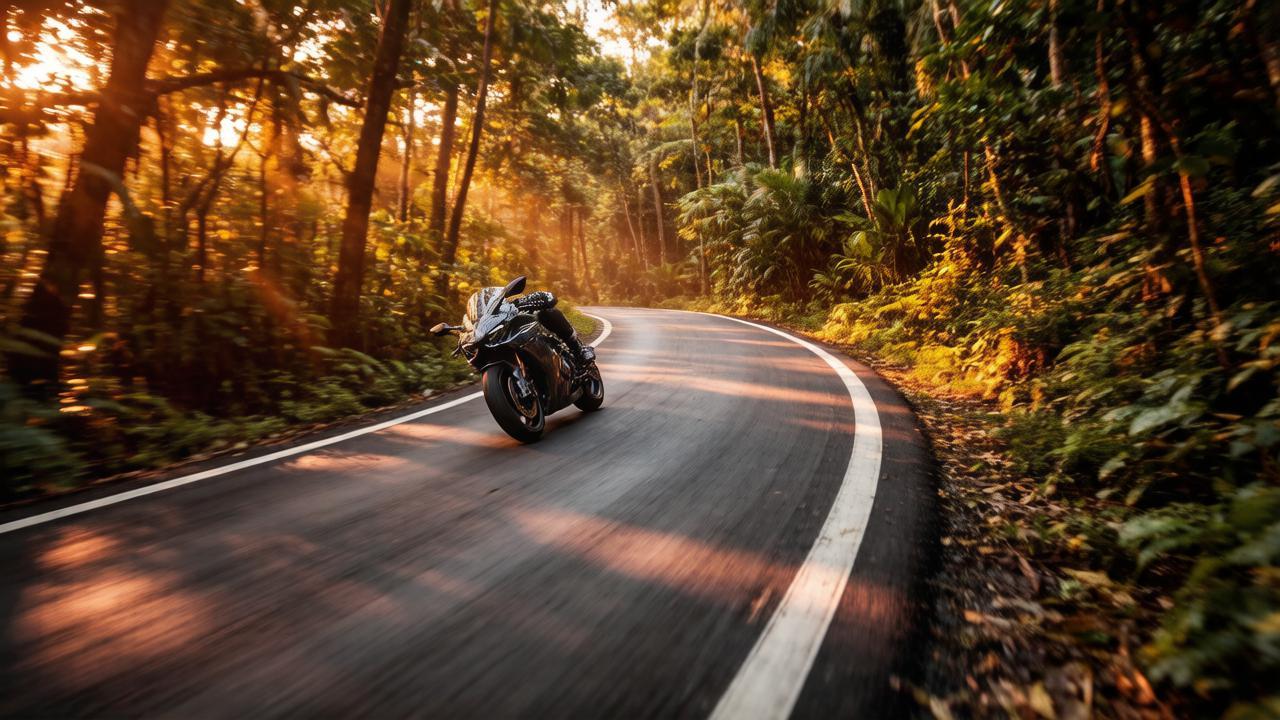
The legendary Samoeng Loop stands universally recognized as the ultimate proving ground for independent riders seeking to test their mechanical setups, throttle discipline, and personal focus against a relentless, continuous barrage of technical corners. Spanning roughly 100 kilometers of high-grade mountain asphalt that loops northwest from the metropolitan grid into the jagged highlands, this circuit packs aggressive elevation drops, tight decreasing-radius corners, blind apex entries, and sweeping high-velocity sectors that demand absolute concentration and machine control from start to finish. It is a route where complacency is instantly punished by gravity and shifting traction coefficients.
Conquering this technical mountain layout requires proper preparation and hardware that will not experience thermal fatigue or brake fade halfway through the descent. Many independent travelers arriving in the north make the critical mistake of selecting an underpowered, unverified vehicle from a generic beach-resort style garage, only to find themselves struggling on steep 18-degree inclines. When you plan to tackle real elevation changes, making sure you chiang mai rent scooter or a properly serviced sport platform from an expert specialist garage changes the entire dynamic of your journey. A pristine mechanical baseline ensures your suspension dampening, tire compounds, and hydraulic braking circuits remain fully responsive when pushed to their operational limits.
Phase-by-Phase Sector Breakdown of the Track
To successfully conquer the Samoeng Loop without compromising your safety or over-stressing your mechanical assets, the circuit must be mentally and tactically broken down into distinct sectors. Each sector introduces unique topographical challenges, changing pavement textures, and distinct line requirements.
Sector one initiates right at the base of the western hills, climbing past the initial municipal boundary markers where traffic density remains moderately high during morning commute hours. This initial ascent requires sharp situational awareness, utilizing your mirrors actively and executing clean, decisive acceleration passes to break clear of slow-moving commercial transport vehicles. As the road begins to narrow and climb steeper grades, sector two opens up into the high-plateau agricultural zones, featuring wide, sweeping curves with excellent long-range visibility.
Sector three represents the technical heart of the circuit—the steep switchback zone where the road twists back and forth in rapid succession down the opposing mountain face. Here, weight distribution becomes your primary tactical tool. Braking must be completed entirely in a straight line before initiating the turn-in phase, avoiding trail-braking errors that can tuck the front wheel on loose surface dust near the inside curb.
Sector Phase | Primary Challenge | Tactical Solution |
|---|---|---|
Phase 1: Urban Launch | Dense mixed traffic and sudden stops | Maintain defensive spacing, high RPM readiness |
Phase 2: Highland Sweepers | High speeds and variable crosswinds | Smooth throttle application, stable body posture |
Phase 3: The Hairpins | Severe downhill gradient and tight radius | Heavy rear brake modulation, early deceleration |
Thermal Management and Hardware Endurance
Long continuous descents place enormous thermal stress on braking components. As brake fluid heats up under continuous frictional resistance, boiling point thresholds can be reached, leading to a spongy lever feel and sudden loss of hydraulic pressure. Riders must develop a disciplined approach to engine braking, holding lower gear ratios or utilizing CVT resistance to manage terminal velocity without dragging the brake pads continuously.
Tire compound integrity is another critical factor. Tropical asphalt surfaces combined with high ambient air temperatures mean your tire pressures will rise significantly after thirty minutes of aggressive riding. Auditing cold tire pressures before leaving your departure base prevents over-inflation anomalies that reduce the effective contact patch footprint during deep cornering angles.
Hydration, Navigation, and Safety Protocols
Cognitive endurance on a 100-kilometer technical circuit requires physical readiness. The intense tropical sun combined with high-velocity wind exposure inside your helmet can induce rapid dehydration, which directly impairs reaction times and decision-making clarity in emergency maneuvers. Always carry electrolyte-enriched hydration packs and schedule tactical rest stops at designated scenic viewpoints along the ridge.
“The mountain doesn’t negotiate with mistakes. Respect the apex, manage your speed through the blind entries, and let the machine work naturally beneath you.”
By treating the route with professional discipline and verifying your equipment before launch, the Samoeng Loop delivers an incomparable two-wheeled experience. It transforms a simple afternoon ride into an unforgettable journey through the heart of Thailand’s premier alpine asphalt network.