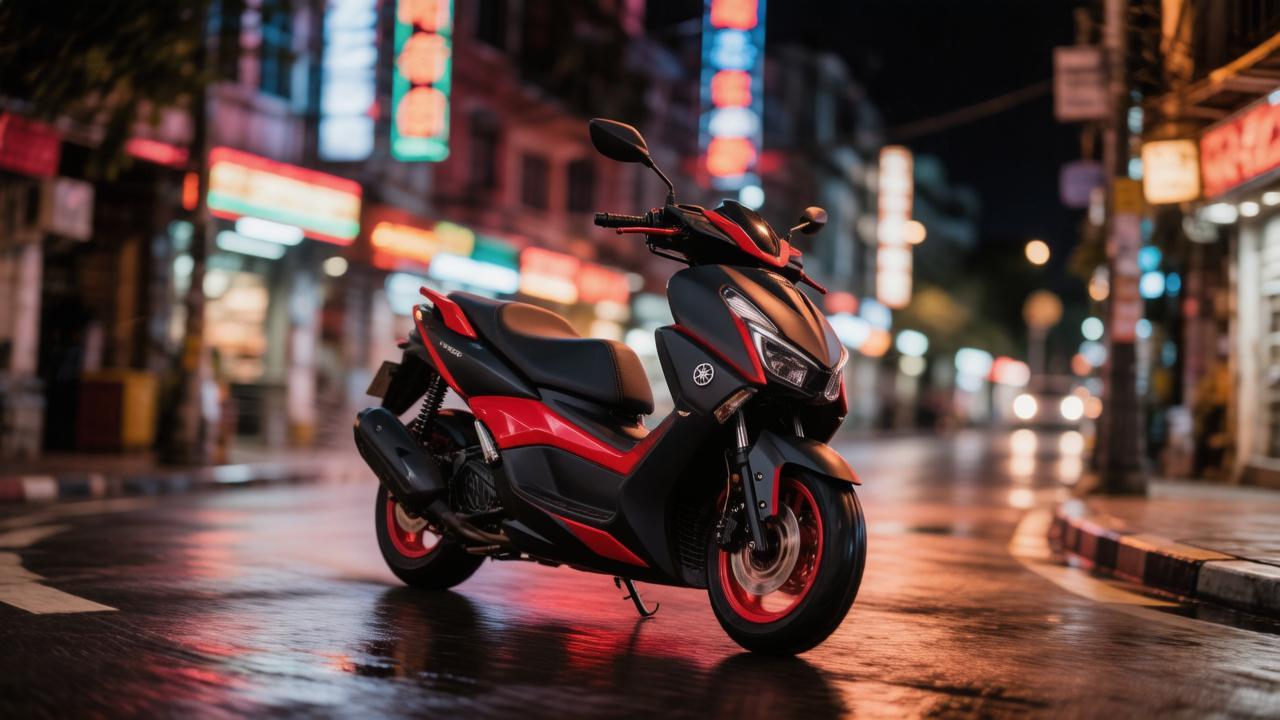
Navigating the complex urban layout and surrounding elevated terrain of Northern Thailand requires a mechanical partner that balances high-speed agility with instant throttle response, thermal endurance, and rock-solid chassis rigidity. When analyzing the absolute peak of modern urban commuters and light sport platforms, the Yamaha Aerox 155 consistently pulls ahead of the pack with a commanding presence. This is not your average lightweight, fragile city moped meant for slow grocery runs; this is an aggressive, sports-tuned machine designed from the ground up to dominate dense traffic patterns, carve through tight concrete corridors, and transform standard daily commutes into high-octane asphalt sessions.
For independent travelers and high-velocity explorers landing in the northern capital, standard public transit is an immediate bottleneck to performance and time management. Fixed routes, crowded songthaews, and inflexible schedules strip away the core essence of travel freedom. Securing an unthrottled, high-performance mechanical platform is the primary objective for any serious rider looking to experience the region on their own terms. Utilizing a premium scooter rental chiang mai service grants you immediate access to top-tier machinery like the Aerox 155, bypassing corporate logistical delays, inflated tour pricing, and mechanical uncertainty, putting the keys to the city directly into your ignition glove.
The Mechanical Core: Unpacking the Aerox 155 Architecture
Before launching onto the city asphalt or attempting a rapid transit launch through the old city gates, any serious rider must examine the internal architecture of their machine. The heart of the Yamaha Aerox platform is its liquid-cooled, 4-stroke, SOHC, 4-valve Blue Core engine equipped with Variable Valve Actuation (VVA). Unlike standard air-cooled automatic scooters that experience severe power fade and thermal throttling under prolonged heavy loads in tropical heat, the liquid-cooled configuration of the Aerox maintains optimal operating temperatures even during prolonged stop-and-go gridlock or aggressive open-throttle straights.
The VVA system acts as a mechanical catalyst, shifting valve profiles once the engine crosses the mid-range RPM threshold. This engineering choice ensures that your acceleration out of a tight traffic pocket or a slow corner remains violent, linear, and completely decisive. You do not wait for the power to build; it hits instantly, allowing you to execute tactical overtaking maneuvers with absolute safety margins. Furthermore, the Continuously Variable Transmission (CVT) has been tuned for rapid engagement, eliminating the sluggish initial lag common in lesser commuter models.
Engine & Power Delivery Metrics
The 155cc displacement delivers a maximum power output of 11.3 kW at 8,000 RPM and 13.9 Nm of torque at 6,500 RPM. This power-to-weight ratio transforms the chassis into a responsive urban dart.
- Bore x Stroke: 58.0 mm x 58.7 mm for balanced high-rev stability.
- Fuel System: Fuel Injection with optimized atomization nozzles.
- Clutch Type: Dry, Centrifugal Automatic paired with a reinforced V-belt.
Chassis Dynamics and Handling in the Concrete Jungle
A powerful engine is entirely useless if the chassis cannot translate that energy down to the contact patch. The Yamaha Aerox features an underbone frame designed with high torsional rigidity, minimizing flex when the bike is thrown aggressively into high-speed sweepers or executing emergency directional changes. The front suspension utilizes standard telescopic forks, while the rear features unit swingarm setup, optionally upgradeable with sub-tank rear dampers on higher-tier trims to soak up severe pavement imperfections.
The rolling stock consists of massive 14-inch wheels wrapped in wide 140/70-14 rear tires and 110/80-14 front rubber. This is a crucial distinction from traditional small-wheel scooters. The wider contact patch and larger diameter wheels provide superior gyroscopic stability at higher speeds, making the bike feel planted and secure when leaning hard through the continuous, wide-radius roundabouts flanking the historic brick walls of Chiang Mai. You experience direct, transparent feedback from the front end, allowing you to modulate your lean angle with surgical precision.
Stopping power is managed by a front 230mm disc brake equipped with Anti-lock Braking System (ABS) technology, paired with a mechanical rear drum. The front ABS intervention threshold is calibrated to prevent high-speed front-wheel lockups on dust-film asphalt or during sudden, heavy downpours where tropical roads turn slick. This gives rookie and veteran riders alike the confidence to brake late and hard right up to the turning point.
The Operational Reality of Urban Navigation
Riding through the vibrant sectors of Northern Thailand introduces unique traffic ecologies. From the chaotic morning rush along Chang Phueak road to the relaxed, artistic evening alleyways of Nimmanhemin, your riding posture and situational awareness must adapt continuously. The aggressive ergonomics of the Aerox force a slightly forward-leaning stance, which centers your body mass over the front triangle, enhancing steering responsiveness.
The under-seat storage compartment offers 25 liters of capacity, large enough to stow a full-face helmet or emergency tactical gear, keeping your center of gravity clean without requiring unbalanced backpack weight. The digital LCD instrument cluster delivers real-time telemetry, including VVA activation status, fuel consumption metrics, and smartphone connectivity via Bluetooth, allowing you to monitor machine health without breaking your eyes away from the road ahead.
Operational Factor | Aerox 155 Advantage | Commuter Impact |
|---|---|---|
Throttle Latency | Instant VVA response | Zero lag in tight gaps |
High-Speed Stability | 14-inch wide tires | Rock solid in sweepers |
Thermal Endurance | Liquid cooling circuit | No power fade in heat |
Pre-Flight Inspection and Safety Protocols
Before initiating any long-range urban or sub-urban transit sequence, running a strict pre-flight hardware inspection is mandatory. Never assume a machine is ready just because the ignition turns. Implement this diagnostic routine before leaving your departure point:
- Tire Pressure Verification: Audit both front and rear cold pressures. Low pressure induces sloppy sidewall flex and increases braking distances exponentially.
- Brake Fluid and Pad Audit: Check the master cylinder reservoir level and inspect brake pad friction material thickness for wear scoring.
- Throttle Return Check: Ensure snap-back tension on the throttle grip is crisp and unobstructed by handlebar attachments.
- Coolant Level Check: Verify the overflow reservoir indicates fluid between minimum and maximum marks to prevent thermal runaway.
Adhering to these mechanical disciplines ensures your journey remains pristine and uninterrupted. The Yamaha Aerox 155 stands as a testament to what happens when utility meets high-performance DNA, proving that an automatic scooter can offer an intensely rewarding, sharp, and exhilarating mechanical experience across Northern Thailand’s epic asphalt network.